Fabrication
MIG and multi-process systems support mixed assemblies, repair stations, and production bays that need stable starts, wire feed consistency, and easy setup control.

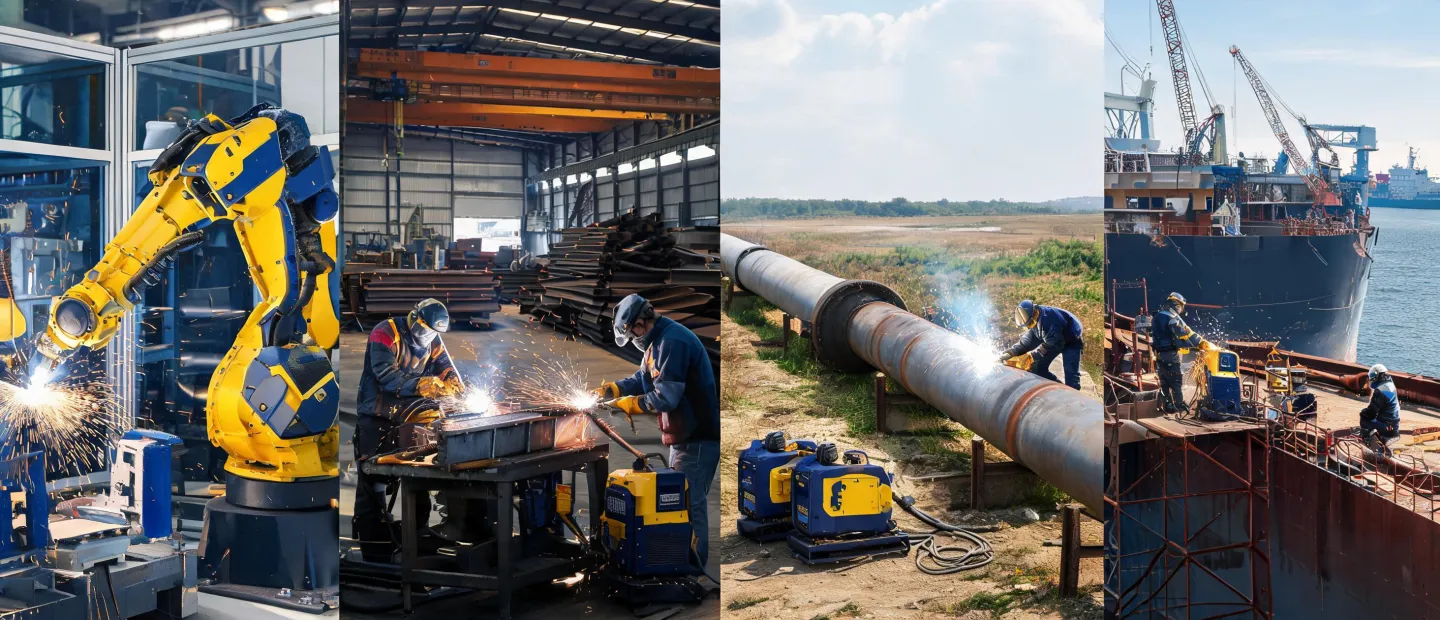
Different sites ask welding machines to solve different problems: continuous fabrication output, field durability, controlled heat input, automated repeatability, or fast cut preparation. ESAB application guidance connects those operational realities to process groups and machine characteristics.
MIG and multi-process systems support mixed assemblies, repair stations, and production bays that need stable starts, wire feed consistency, and easy setup control.
Heavy plate, long seams, and constrained access place emphasis on rugged equipment, operator familiarity, cable management, and process repeatability.
Field welders and plasma cutters must be evaluated against power availability, weather exposure, maintenance access, and documentation requirements.
Production and repair environments depend on controlled heat input, fixture repeatability, clean setup records, and efficient transitions between materials.
TIG process control, documentation discipline, and high-skill operator workflows make precision settings and service traceability especially important.
Training centers need equipment that presents clear controls, safe setup habits, durable accessories, and enough process range for structured curriculum.
A shop welding brackets all day does not evaluate a machine the same way as a pipeline crew, a vocational lab, or an automation integrator. ESAB industry guidance therefore starts with the process environment. Material thickness affects amperage and duty cycle. Operator count changes how important simple controls and repeatable presets become. Input power determines whether a compact inverter is enough or whether a more robust installation plan is needed. Access to service parts changes the practical risk profile of remote work. Quality documentation may be light for repair tasks and formal for regulated production. These variables shape the final equipment package.
Shift length, weld count, and target deposition rate guide duty-cycle expectations and cooling decisions.
Steel, stainless, aluminum, pipe, sheet, and heavy plate all push the process toward different controls and accessories.
Outdoor use, generator power, long leads, and transport requirements change what durability and setup features matter most.
Procurement, maintenance, safety, and quality teams may each need different information before approving the purchase.
Tell ESAB where the machine will work, who will operate it, and which process outcomes matter. The response can focus on fit instead of generic catalog descriptions.