Define the process window
ESAB reviews base metal, thickness, joint access, welding position, expected deposition rate, and whether the work is manual, mechanized, or automation-ready.

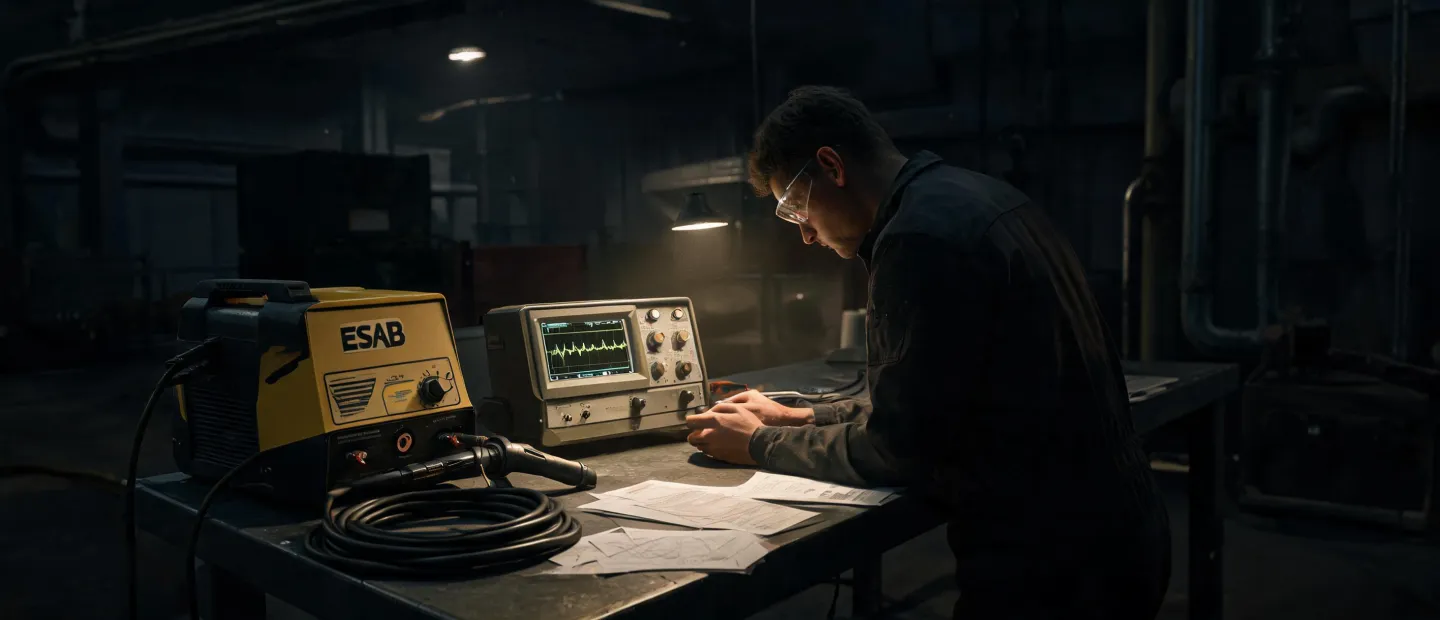
For industrial buyers, service begins before the purchase order. ESAB support translates process requirements into machine ranges, accessory lists, documentation needs, and commissioning priorities.
Specification support is organized around the work that affects production: arc process, duty cycle, power environment, operator workflow, and quality documentation. A maintenance buyer may need rugged stick machines that tolerate generator power and outdoor handling. A fabrication cell may need MIG platforms with stable wire feeding, spool gun options, and clear settings for repeat jobs. A training center may care about repeatable setup, simple controls, and consumable discipline. A precision shop may need TIG pulse behavior, water cooling, and procedure notes that can be reviewed by quality personnel. The table below keeps those conversations practical and traceable.
| Service area | What ESAB reviews | Output for the buyer |
|---|---|---|
| Process mapping | Material, joint type, thickness, position, deposition rate, cutting requirement, and expected operator skill level. | Shortlisted MIG, TIG, stick, plasma, or multi-process equipment families with practical configuration notes. |
| Power and duty cycle | Input voltage, extension cable use, generator conditions, shift pattern, ambient heat, and target amperage window. | Machine class recommendations that reduce undersizing, overheating, and unnecessary specification creep. |
| Accessory planning | Torches, wire feeders, regulators, carts, coolers, remote controls, work leads, and plasma consumable planning. | A more complete purchasing view for procurement teams comparing installed cost instead of only machine price. |
| Documentation support | Manuals, conformity information, electrical requirements, setup guidance, and process notes for internal records. | Reference material that supports maintenance planning, operator training, and quality review conversations. |
The service workflow keeps technical detail visible without forcing buyers through a generic quote form. Each step narrows the machine family, then tests the choice against real shop constraints.
ESAB reviews base metal, thickness, joint access, welding position, expected deposition rate, and whether the work is manual, mechanized, or automation-ready.
Input voltage, generator use, extension leads, duty cycle, and thermal conditions are compared against candidate machines before the shortlist is prepared.
Torch length, cooling, wire feed, electrode range, plasma consumables, and workholding needs are mapped so purchasing teams see the practical package.
The final response can include machine rationale, key constraints, accessory notes, and references useful to production, safety, maintenance, or quality teams.
Send the work envelope, power conditions, and equipment goals. The response can focus on the machine class and documentation your team needs to move forward.